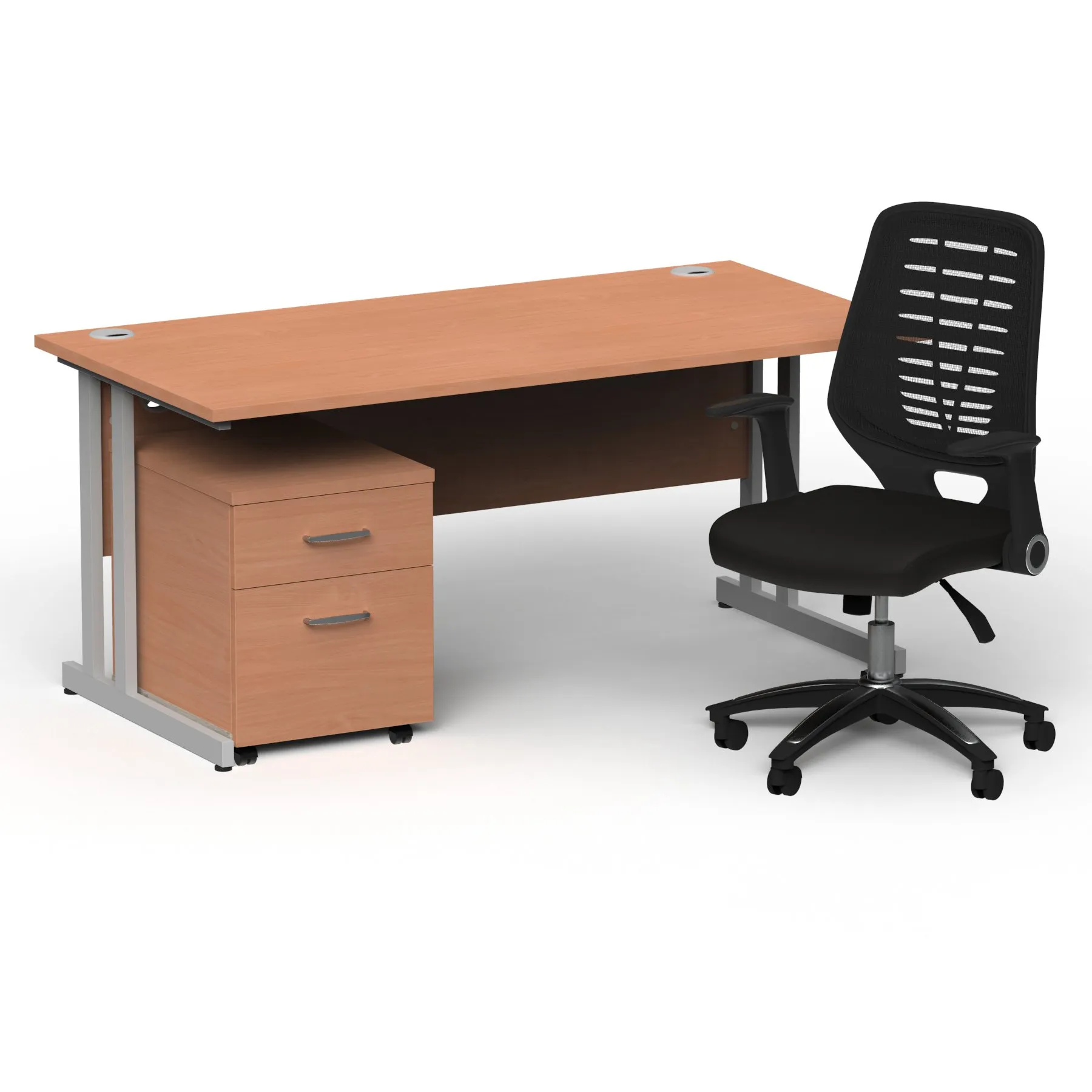
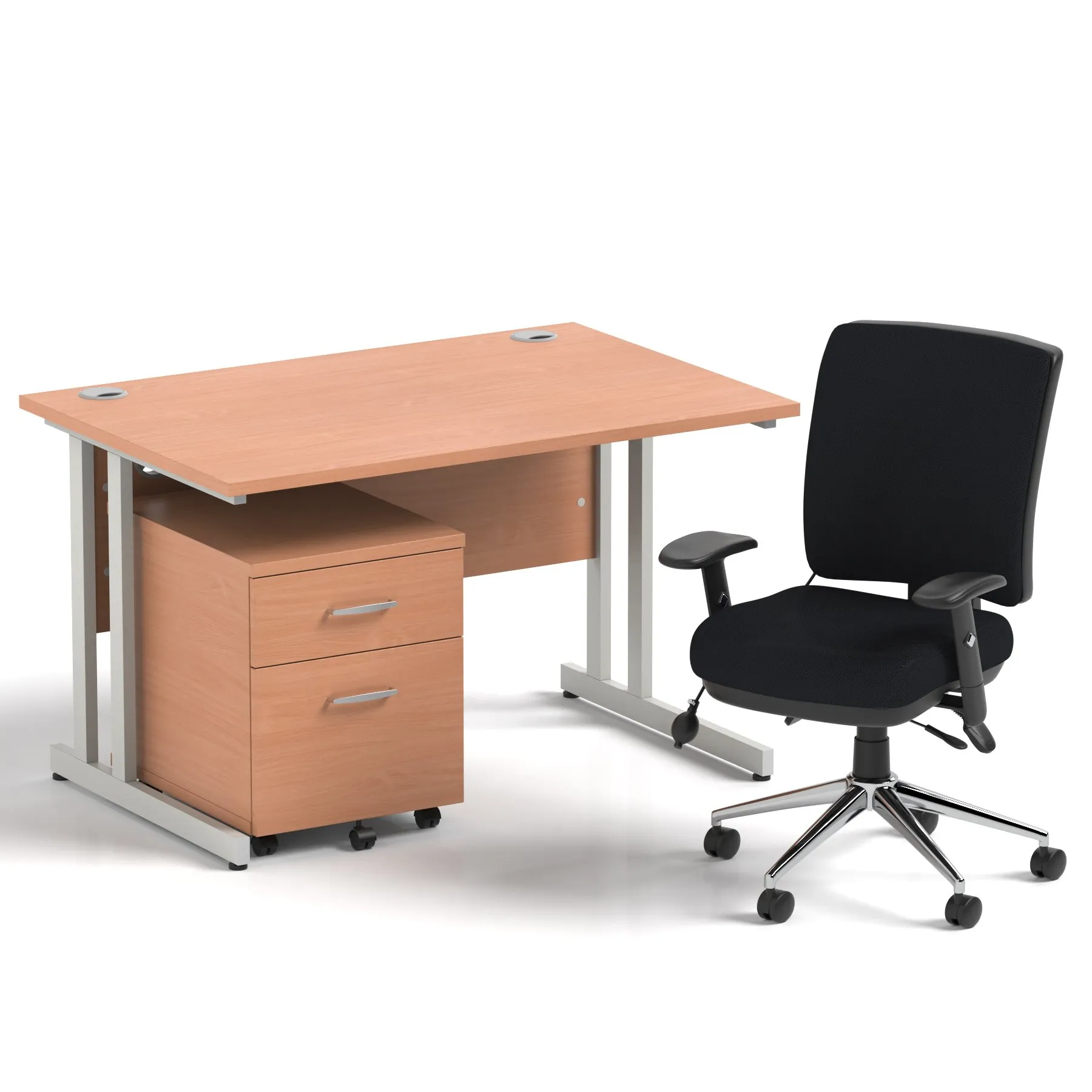
Straight desks explained
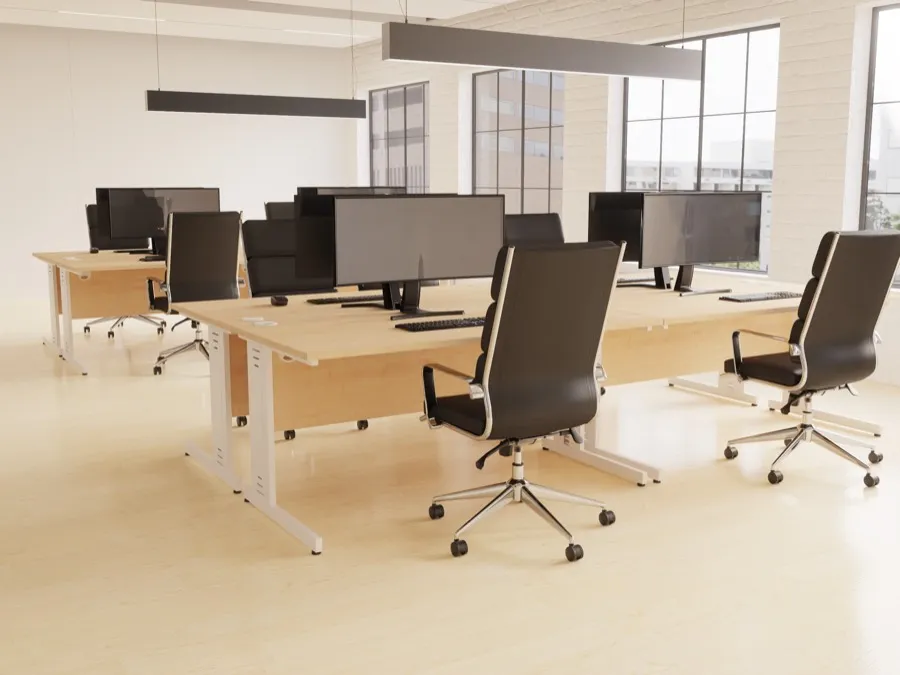
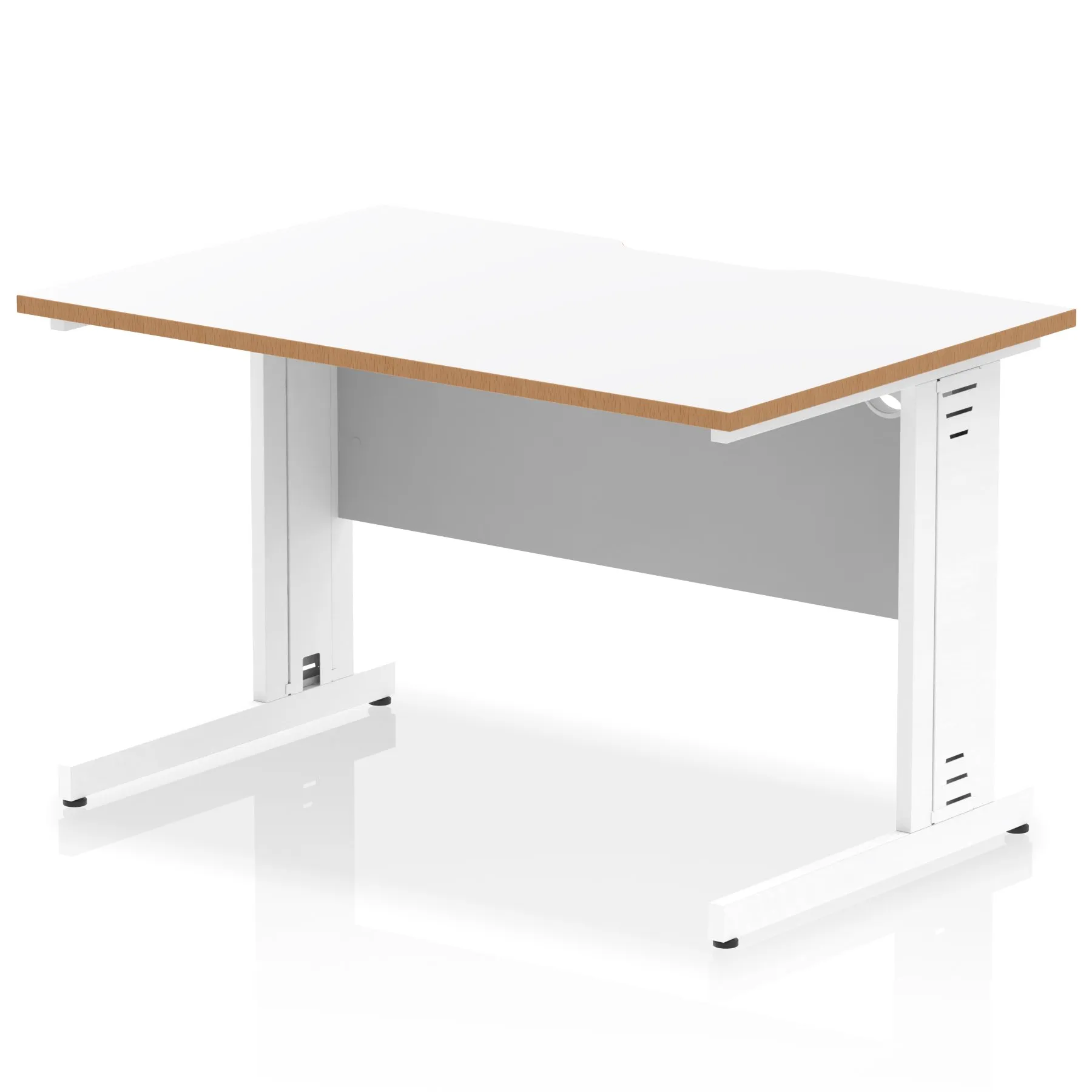
Rectangular desks: the workhorse of the office and the shape most layouts are built from. Straight desks line up in rows, face each other in banks, and sit against walls without wasting corners.
Why straight is usually right
A rectangle is predictable. You can plan a floor from a grid of them, add one to an existing row without redesigning anything, and move them later without discovering that a shape only worked in one position. Corner desks give more surface per person, but they lock you into a layout.
The practical test is whether people need spread-out space. Someone working from two screens and a keyboard is fine on a straight desk. Someone handling drawings, samples or paperwork usually is not, and that is when a corner desk earns its footprint.
Sizing without guessing
1200mm suits a single screen and a laptop. 1400mm to 1600mm is the comfortable default for most desk jobs with dual screens. Beyond 1800mm you are usually better served by a corner desk, because the far end of a very long straight desk goes unused.
Depth matters more than people expect. A deeper top puts the screen further from the eyes, which is the cheapest eye-strain fix available.
Leg type is the real choice
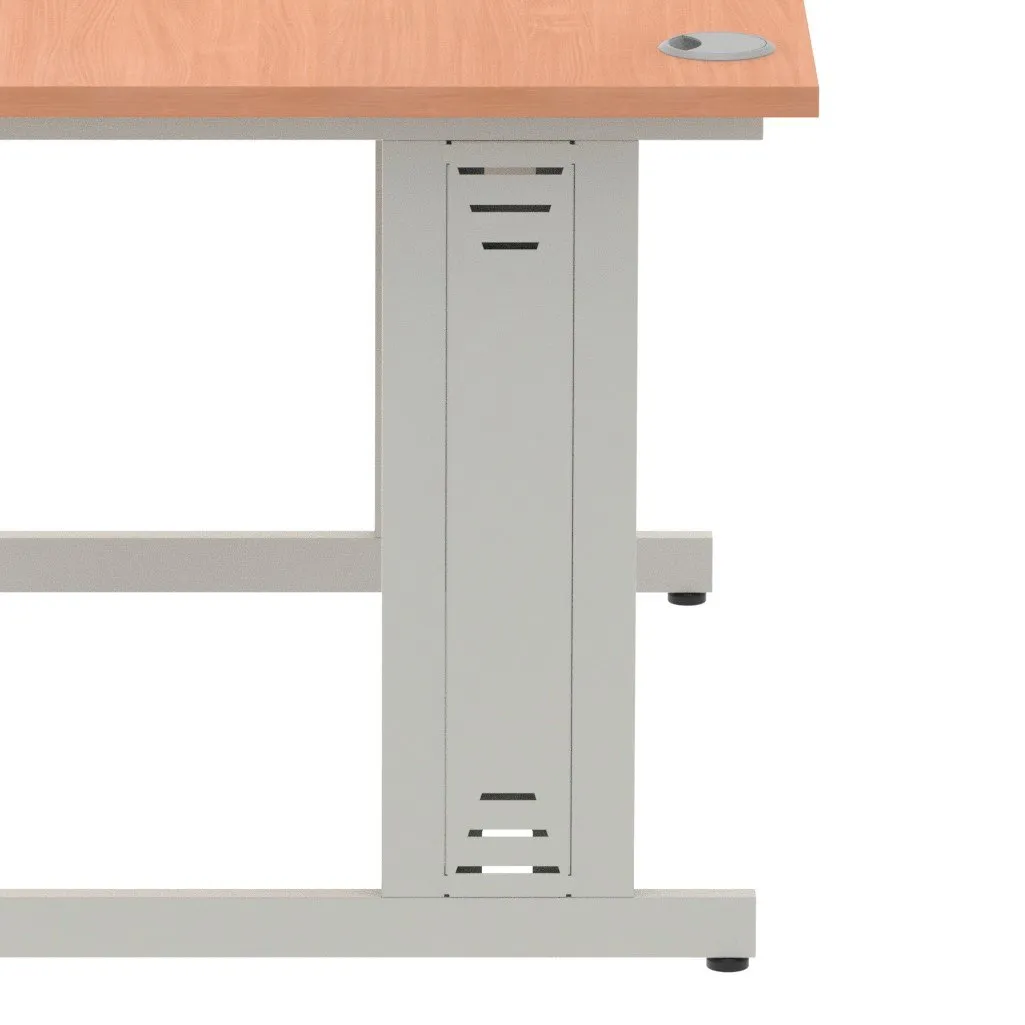
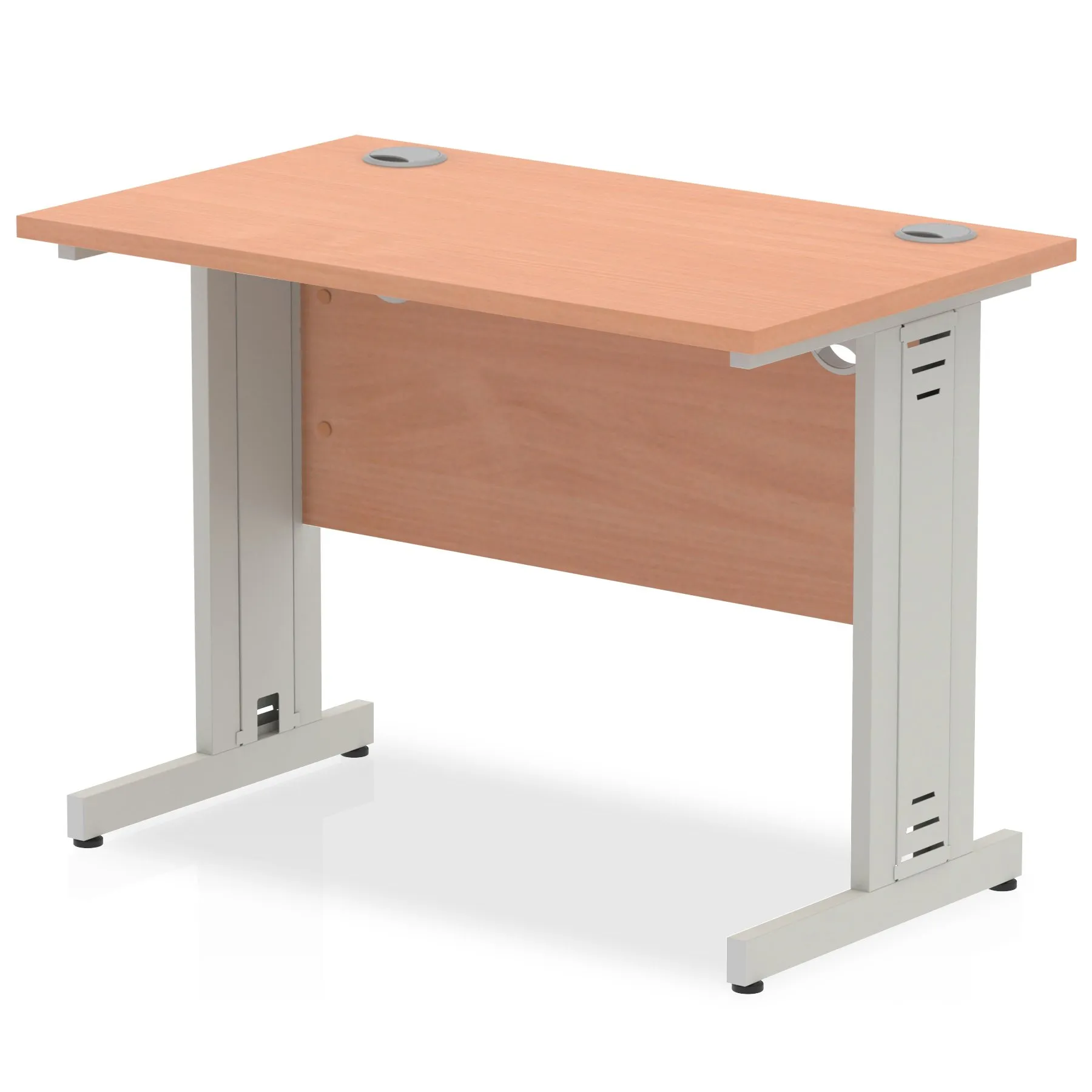
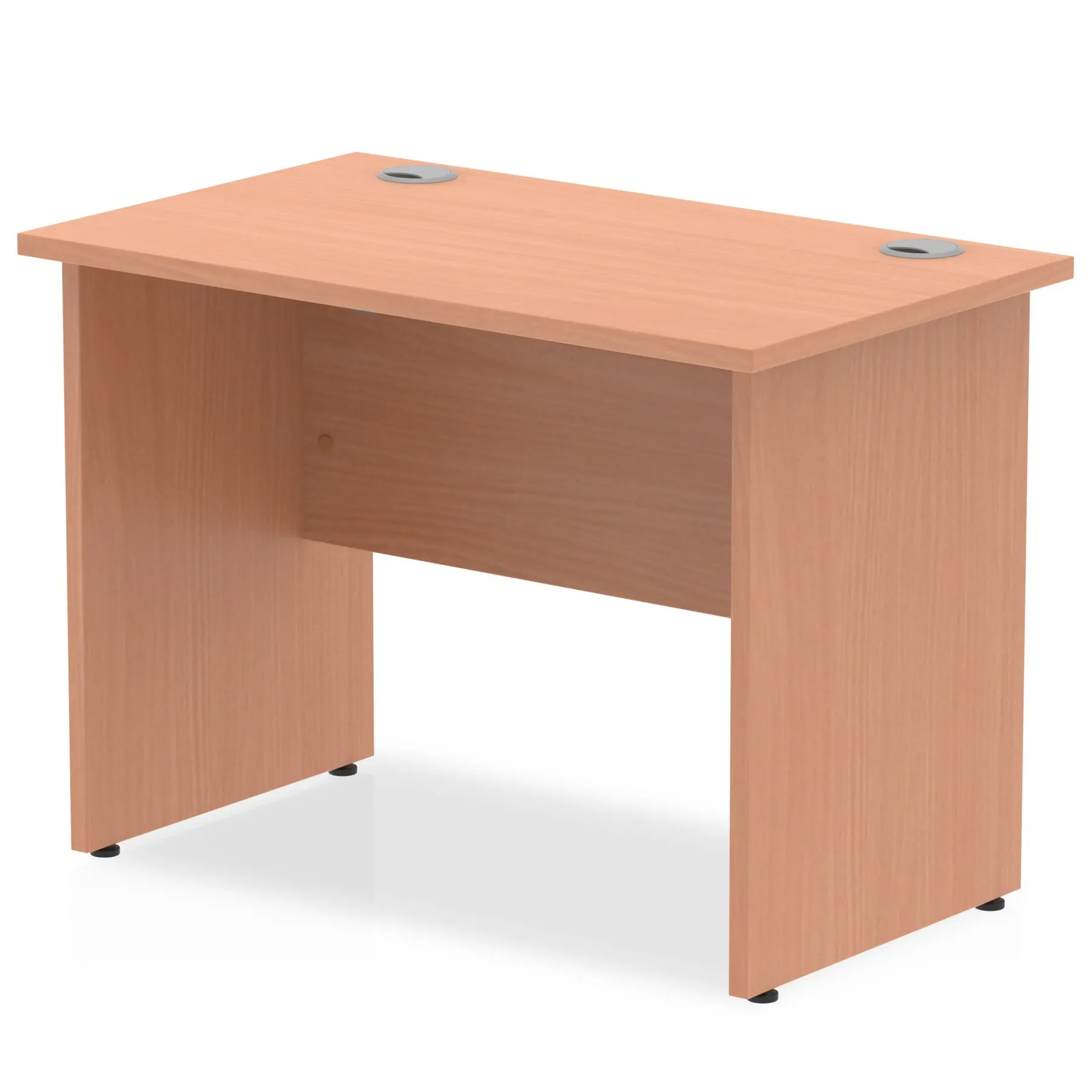
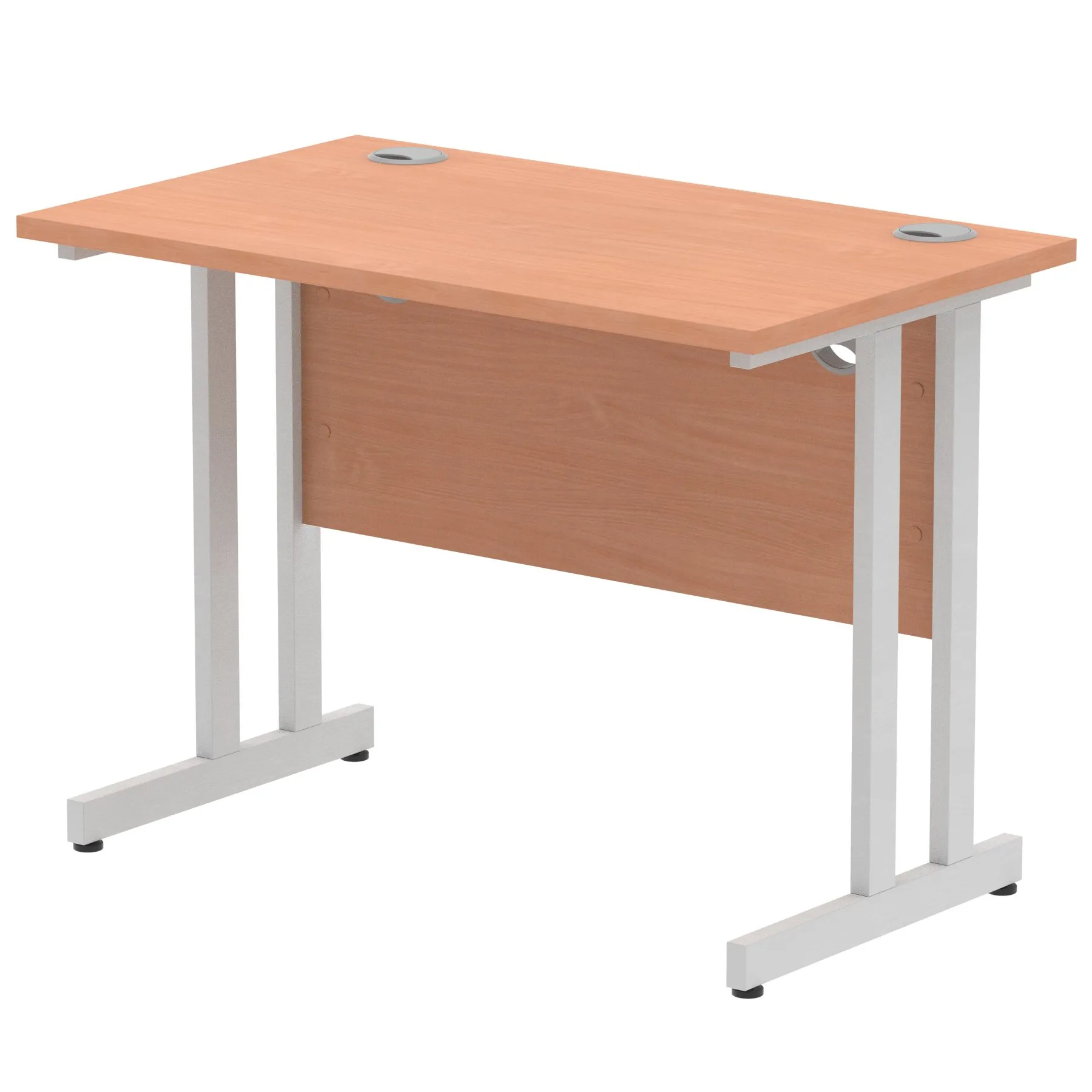
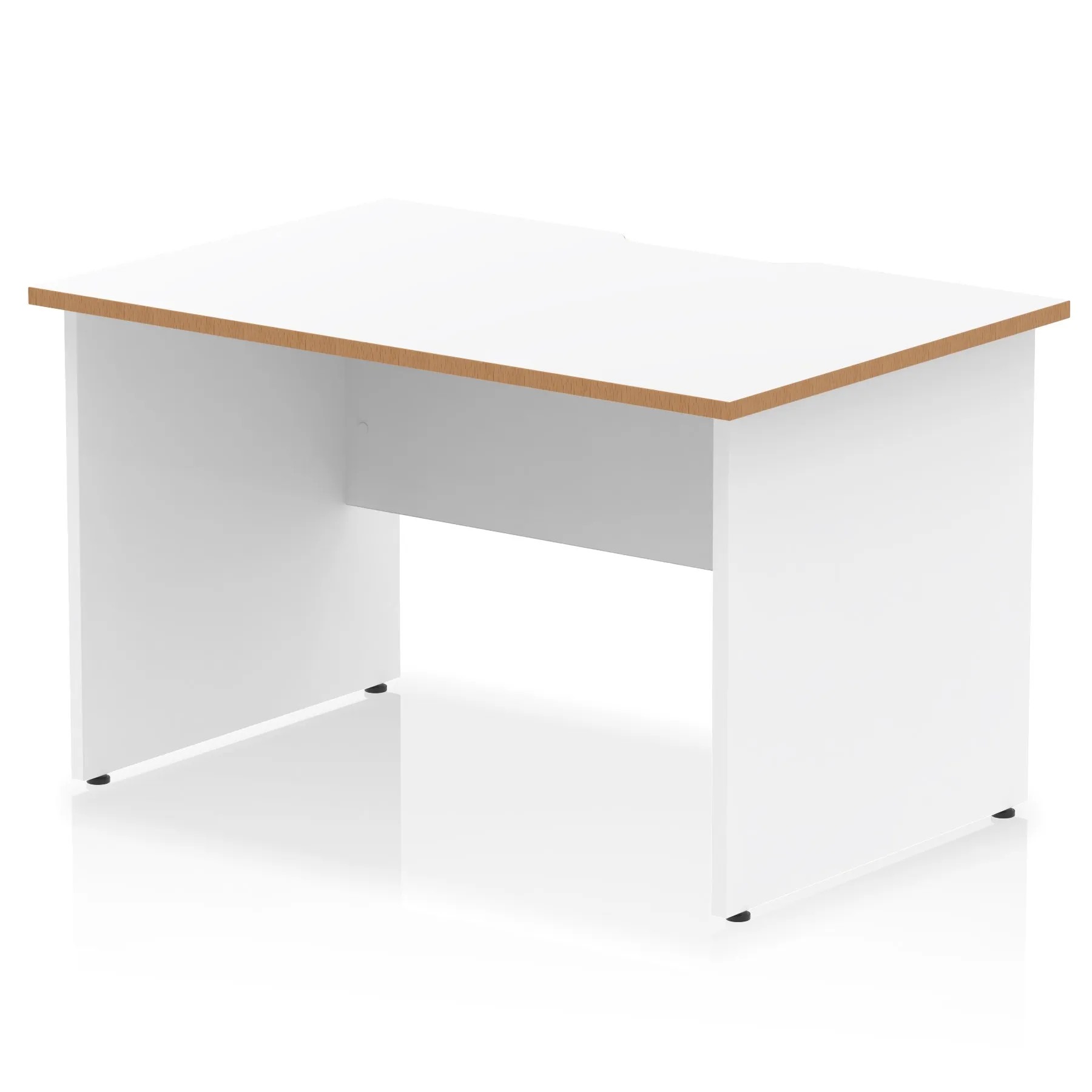
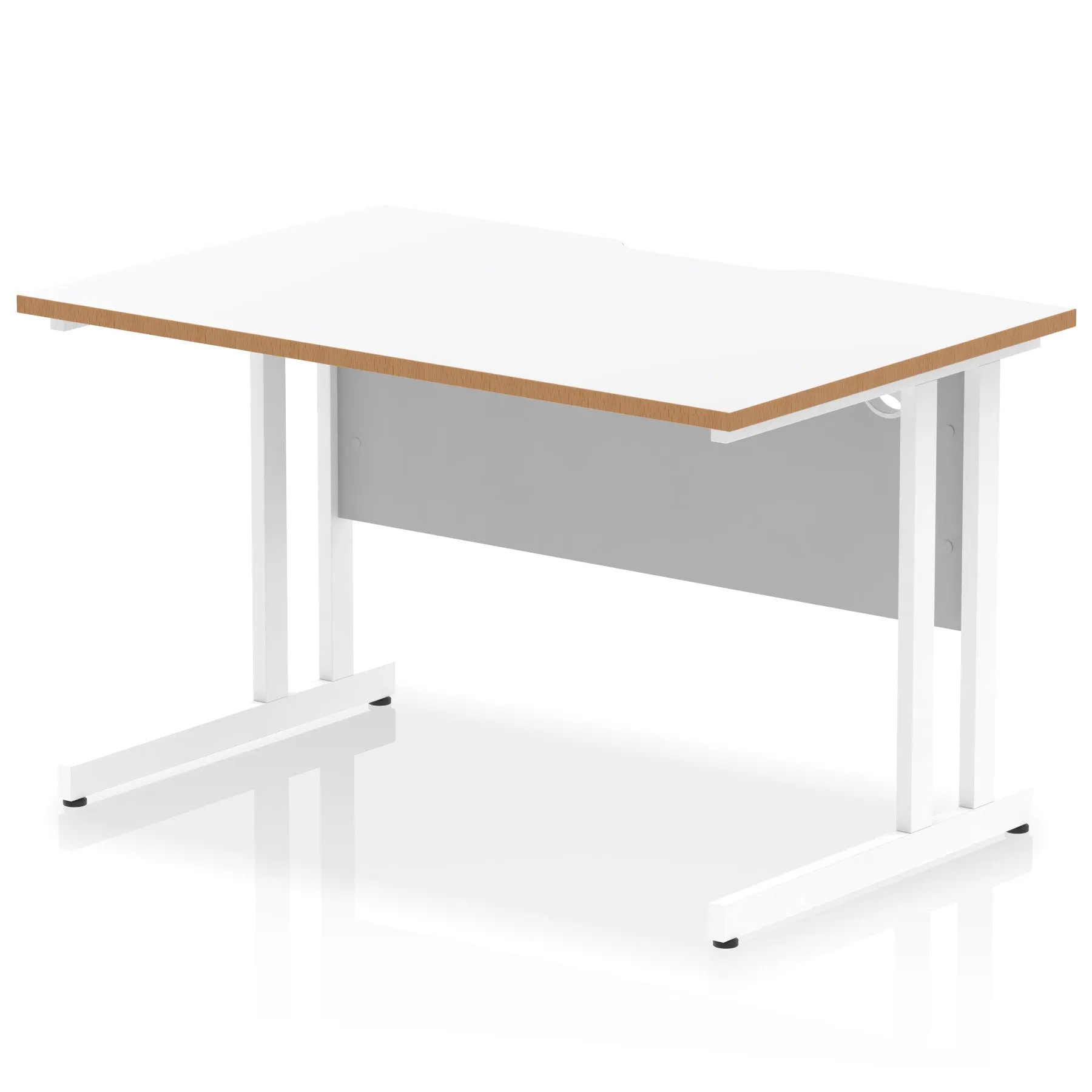
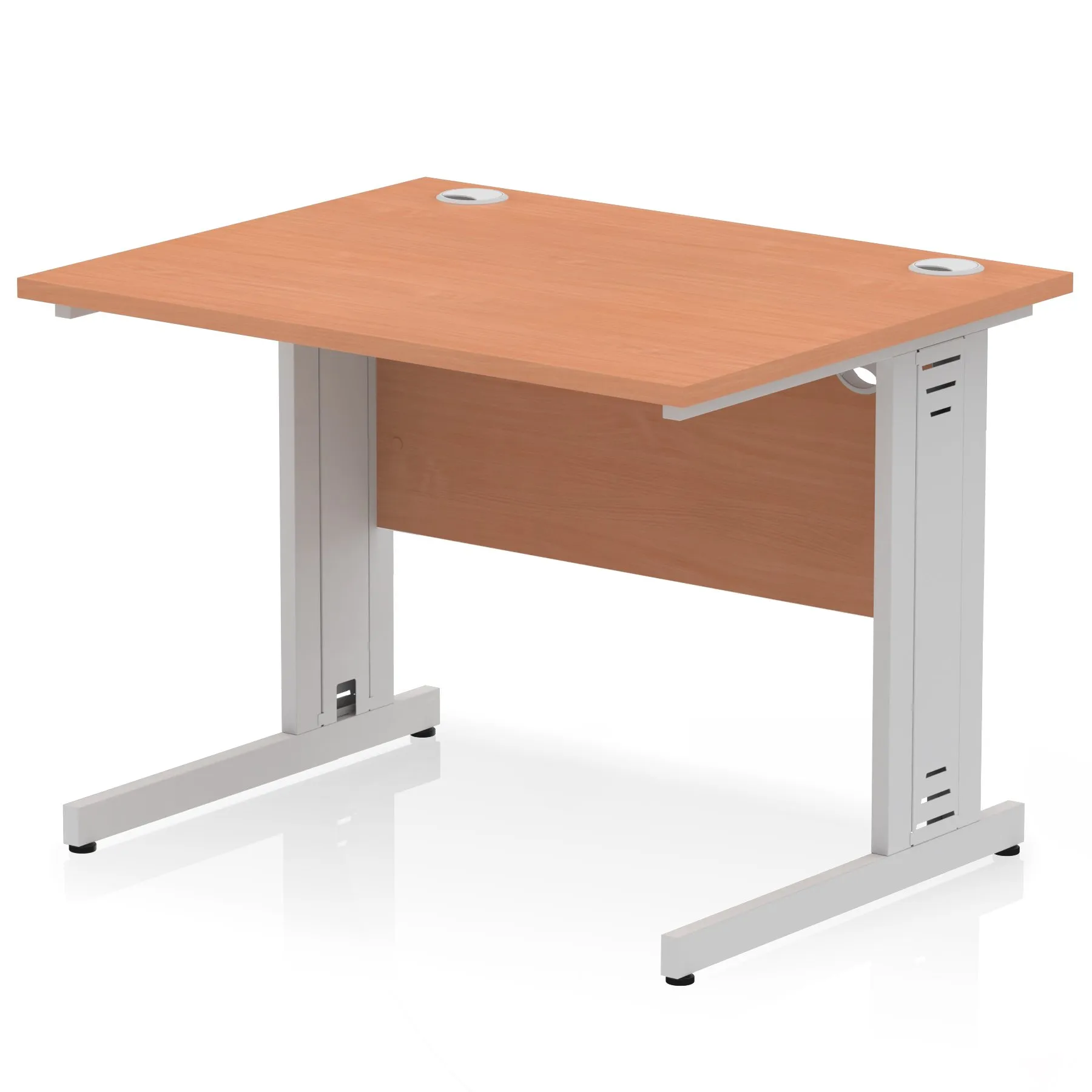
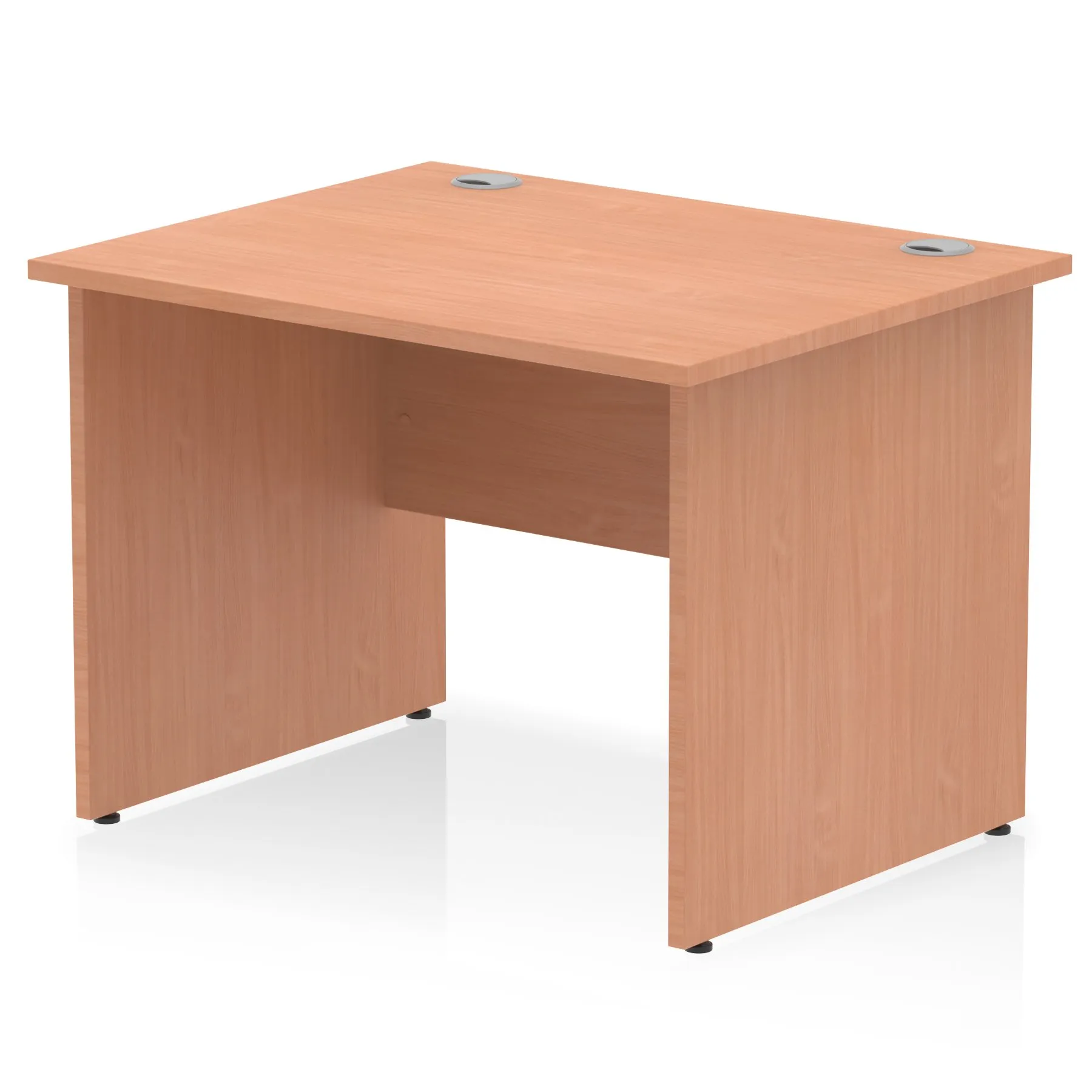
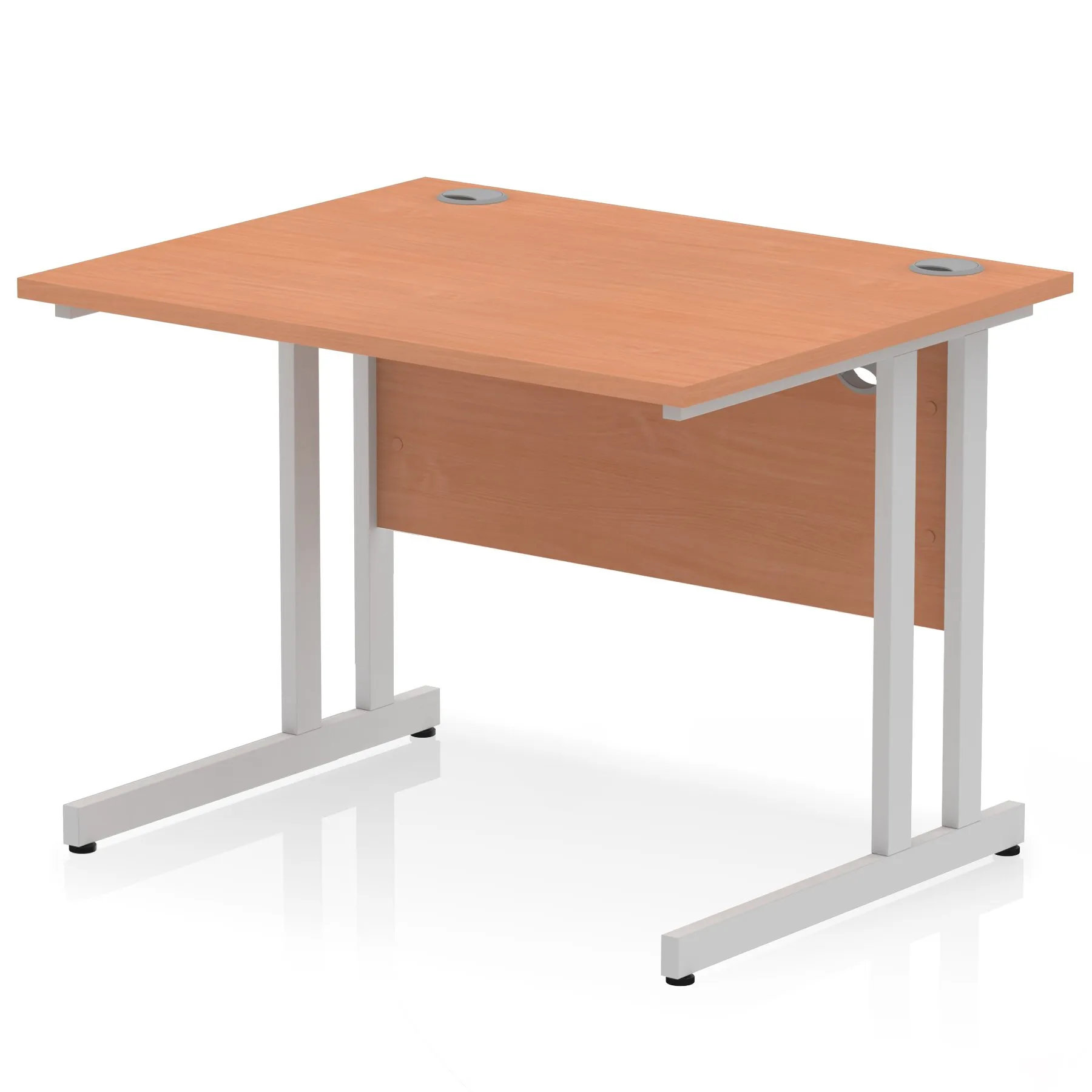
Every straight desk here comes in cantilever, panel end or cable managed form. That decision changes the look of the room far more than the size of the top does.
Smaller and softer options
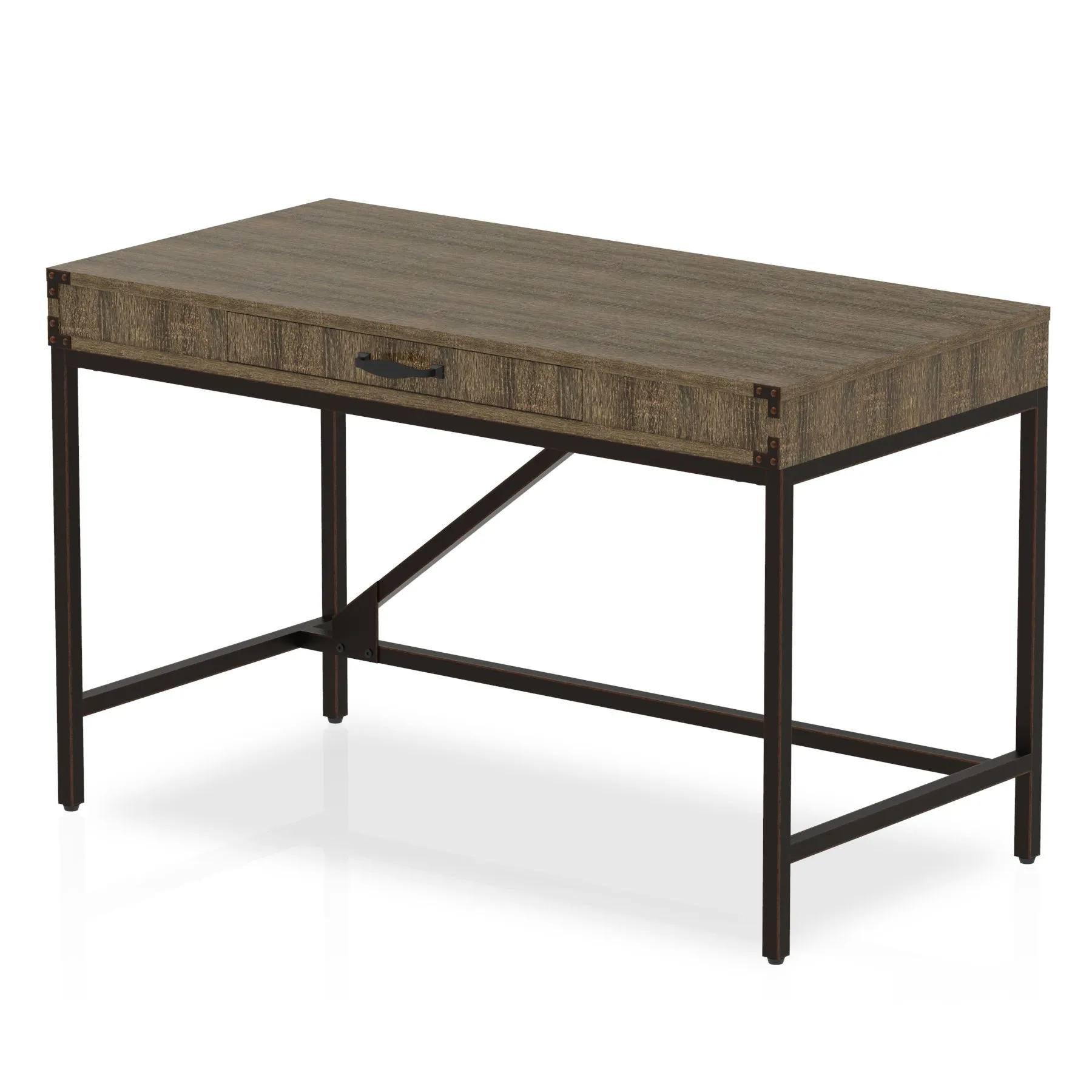
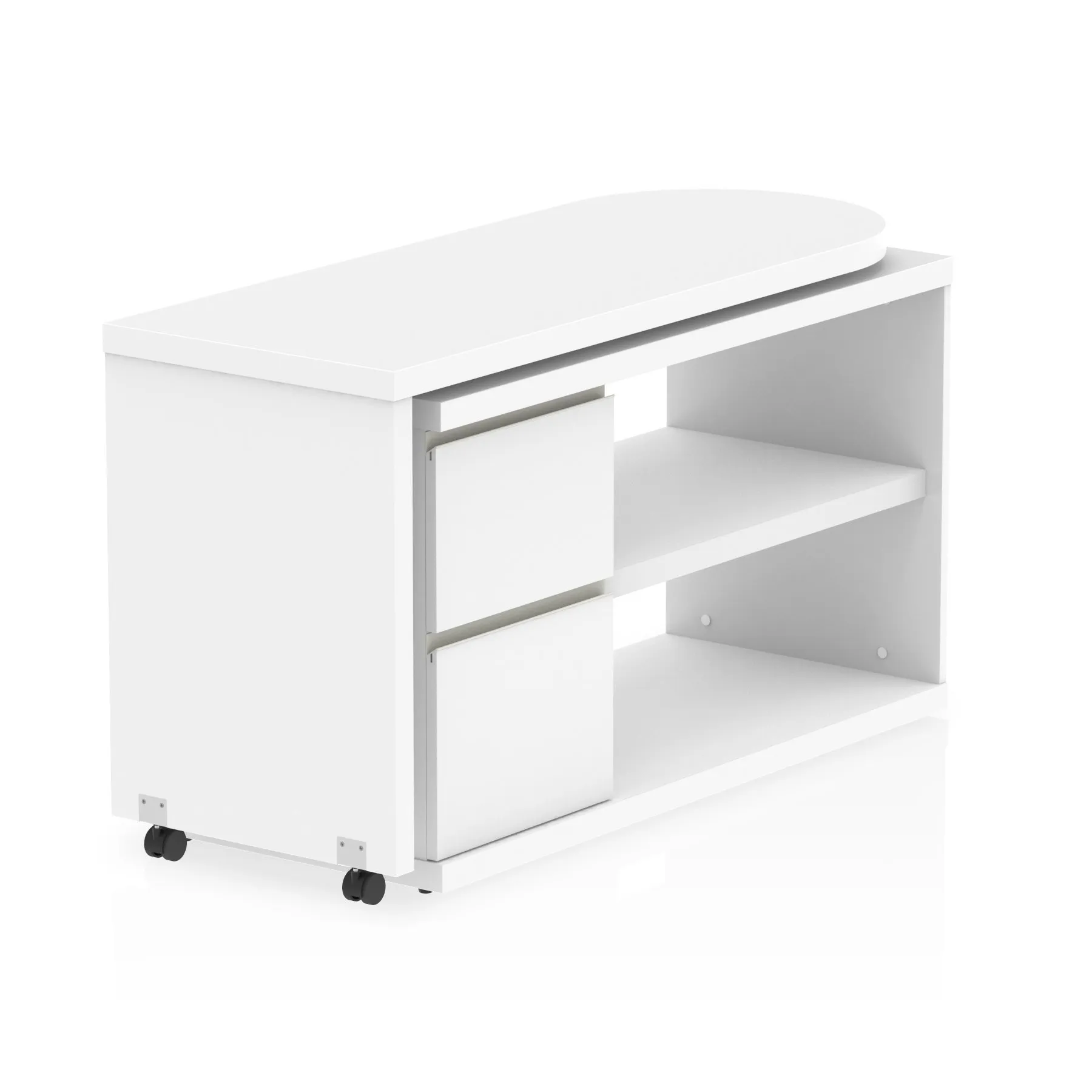
The Impulse contract range covers the standard office. For rooms where a desk should look like furniture rather than office equipment, the Chester and the Fleur smart storage desk are worth a look, and they carry over into our home office desks.